
The Super Bowl had great ads as always last night. This one from Colgate is a great reminder on what we all can do to help with the drought. Colgate #EveryDropCounts

A soldier blinded in a rocket attack in Afghanistan has used photography to overcome the trauma of his horrific injuries, with stunning results.
Chris Nowell, 32, lost total sight in one eye and was partially blinded in the other during a Taliban attack on his base in Helmand province.
After a month in hospital the trauma of the attack left him facing an uncertain future and scared to leave the house. But, encouraged by his wife Claire, he started attending Blind Veterans UK events and soon threw himself into photography.
The father-of-three said: 'Photography gave me an excuse to get out whereas I was sitting around doing nothing before. I had no motivation to do anything.


The
detail of these mummies never sees to amaze me. It is sad that most of them has
met with a violent death.
The
bogs work their magic upon the flesh through the action of a long-chained
molecule called sphagnan, found in decaying peat moss. Sphagnan reacts with
enzymes secreted by putrefying bacteria, preventing the microbes from breaking
down organic matter. At the same time, sphagnan leaches calcium from bones,
leaving them bendy like rubber or dissolving them altogether. And because peat
moss also contains humic acid, which expels water from soft tissue, skin
steeped in bog water turns to bronzed hide.


His Valentino fashion shoot was almost marred - but in the end made - by a ferocious dust cloud in Kenya


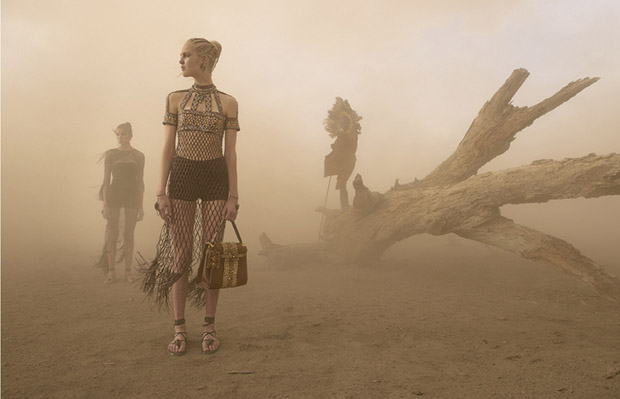
The US photographer Steve McCurry made his name first as a photojournalist, shooting in Afghanistan, shortly before the Soviet invasion of 1979. He went on to shoot photo stories for the likes of National Geographic in exotic and extreme locations across the world from Iraq and Iran to the Lebanon, Cambodia and beond. Despite worldwide fame, to this day he continues his pioneering, story-based photojournalism with similarly harrowing, though effortlessly told, stories on the plight of disenfranchised communities around the world - from the tribes of the OMO Valley in Ethiopia to the abused female domestic workers in Hong Kong.
More recently still, he has tried a little fashion photography, producing photo stories for the likes of Etnia sunglasses, and even shooting the 2013 Pirelli calendar. Yet, just because he’s taken on a few clothing campaigns, it doesn’t mean he’s cut down on the air miles.
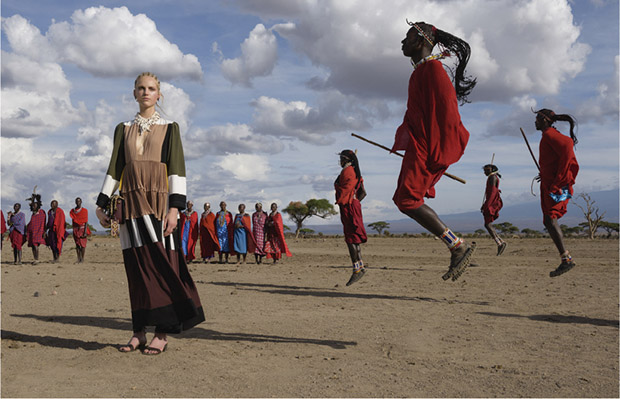
One of Steve McCurry's photographs for Valentino's Spring/Summer 2016 campaign. Courtesy of Valentino and Steve McCurry
Steve shot his latest series, for the Italian fashion house Valentino, at the Amboseli National Park, in Kenya. The label’s creative directors Pierpaolo Piccioli and Maria Grazia Chiuri, picked McCurry partly because their Spring/Summer 2016 collection was inspired by African culture. Yet they also chose the veteran photojournalist because, for them, “he’s not a fashion photographer; he’s a culture reporter.”
“Our emotions about African culture, the idea of beauty [achieved by] the interaction different cultures, the idea of tolerance, this is the message we wanted to deliver,” Piccioli told Women's Wear Daily. “That’s why we wanted to shoot in Africa with Steve McCurry. He’s not a fashion photographer; he’s a culture reporter. We wanted to shoot not a fashion vision [of Africa], but more of a cultural vision — and not in a studio with an elephant.”
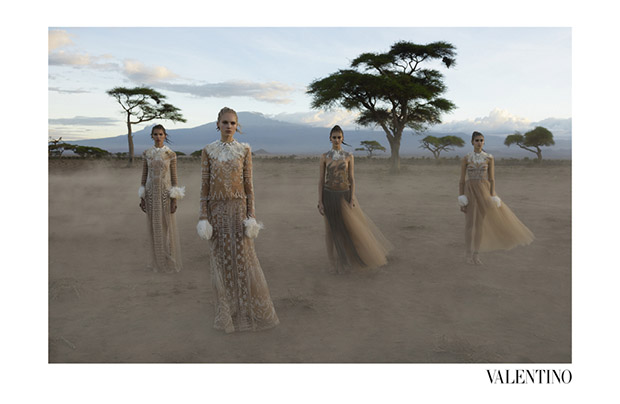
http://uk.phaidon.com/agenda/photography/articles/2016/january/12/steve-mccurry-fashion-shoot-hit-by-dust-storm/

Hungarian journalist and human rights lawyer Boglarka Balogh recently published a series of photos for a good cause… and it blew up in her face.
Balogh is now being widely criticized online for the project, which featured Photoshopped portraits of her face edited onto the portraits of black African tribeswomen.
The project was originally published by Balogh a couple of weeks ago in a blog post onBored Panda. She wrote that after spending time in Africa, Balogh wanted to share the beauty of the continent and the cultures she found there.
The project was originally published by Balogh a couple of weeks ago in a blog post onBored Panda. She wrote that after spending time in Africa, Balogh wanted to share the beauty of the continent and the cultures she found there.
“I became fully aware of the issues regarding a number of endangered tribes, and the speed at which they are fading away,” she said. “These stunning portraits show how beauty varies across the globe and prove that all of us are beautiful in a different way. They’re celebrating stunning tribal beauties at the brink of extinction.”
She decided to raise awareness for these secluded and often endangered cultures by digitally recreating what she would look like as a member of each one. Partnering with a Photoshopper, she replaced original eyes and facial features with her own. Here are a few of the images she posted:


http://petapixel.com/2016/01/08/woman-slammed-for-photoshopping-her-face-onto-african-tribeswomen/


